The first version
- An idea shared between friends, initially intended as a page of rules.
- A PHP website paired with an Android-only app.
- A short-lived launch more than 15 years ago.
From Bill · Independent project · BarTag
Two friends asked me for a one-page website explaining their game. I suggested an app. A perfectly reasonable response to a small request, apparently. More than 15 years later, I came back to the idea so friends could play together from a browser, whatever phone they owned.
The original idea
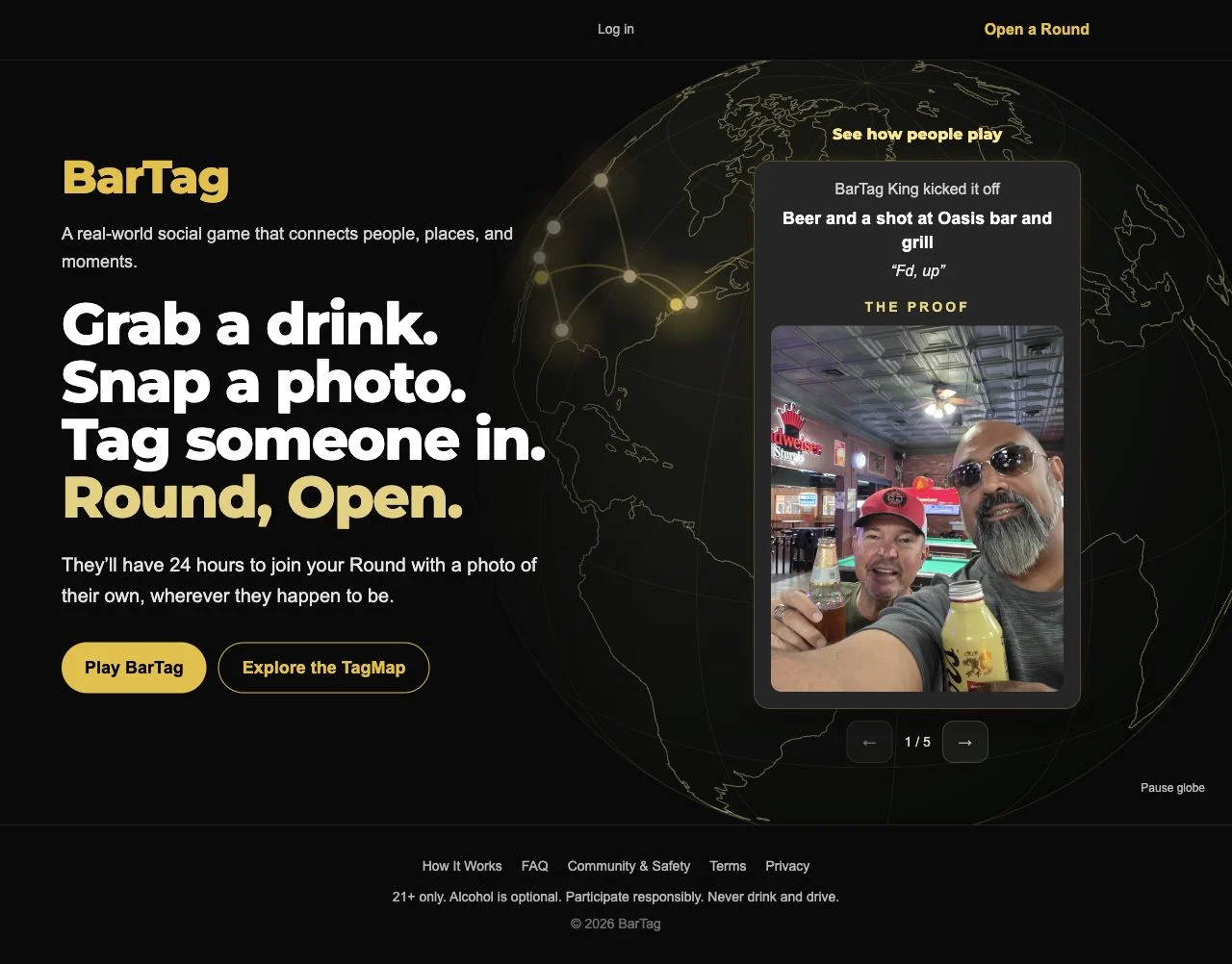
The original game came from two friends: text a photo to someone and challenge them to grab a drink within 24 hours—or owe the other person a drink. They wanted a simple page so others could play too.
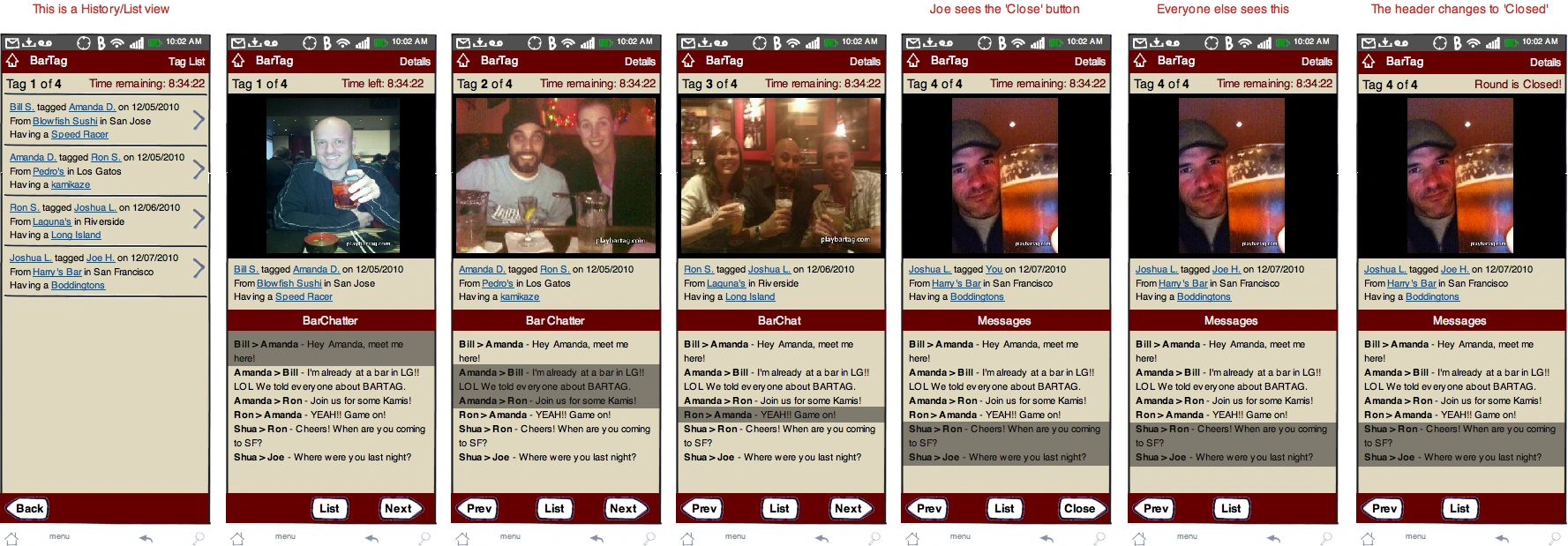
I proposed making it an app and built a PHP public website alongside an Android-only application. That first version ran for roughly a year or less before shutting down.
The idea stayed with me. So did one particular frustration: a friend’s choice of phone shouldn’t decide whether they can join the game.
Bringing it back
Years later, while stuck in traffic, I told ChatGPT the BarTag story and asked what rebuilding it would involve. Technology had moved on, and the idea started looking possible again.
That night, I had a working prototype. Over the next few months, I developed the gameplay, interface, and supporting systems, then published the app on its original domain.
The prototype was the encouraging part. The months that followed were the part where accounts, permissions, photos, and notifications all needed to behave.
A different starting point
The experience
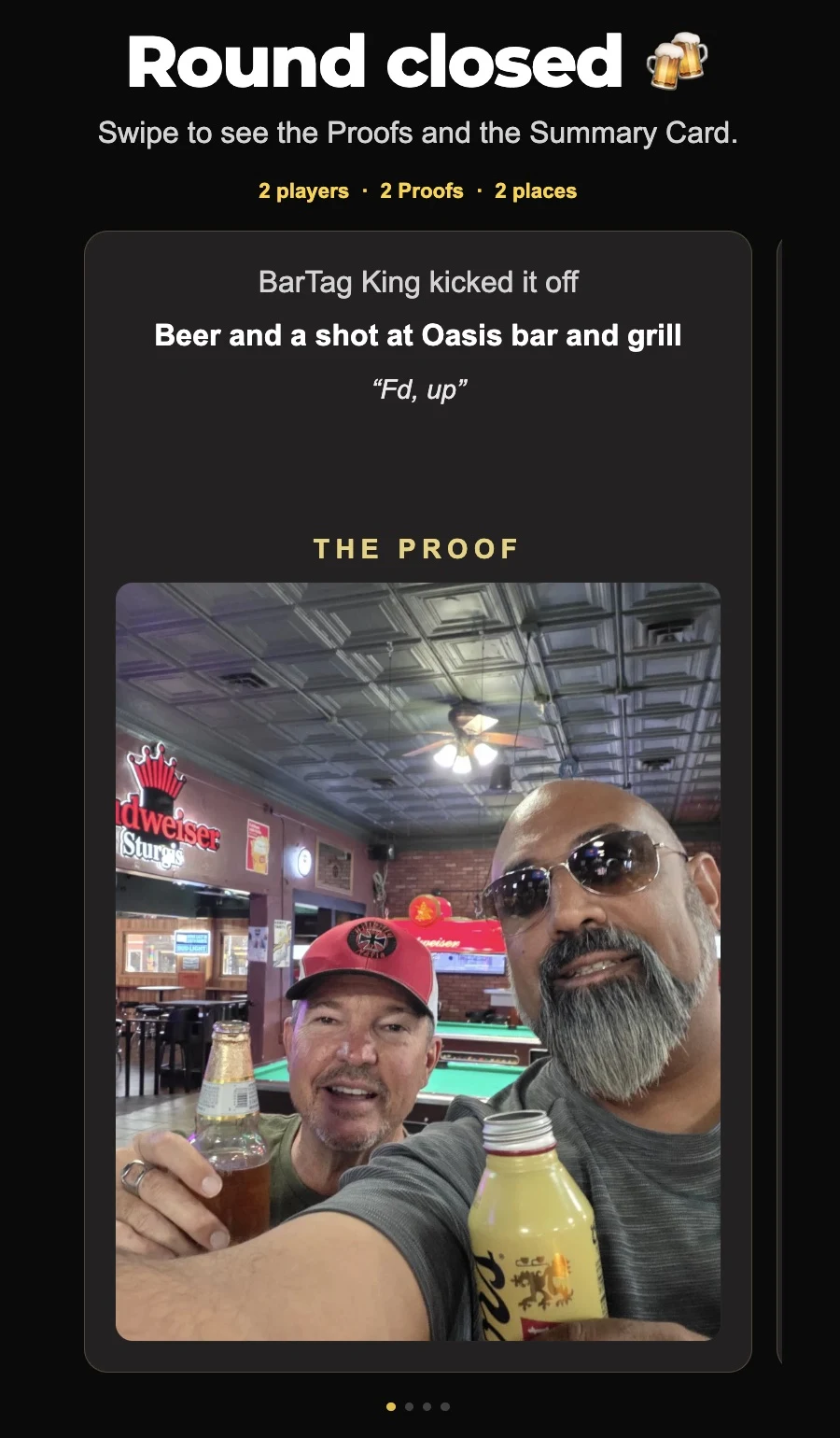
A player opens a Round with a photo and a place, then tags someone in. As people join and submit their own Proofs, the Round becomes a shared record of real-world moments.
Participants can tag more friends into the same open Round. Signed-in players can add additional Proofs, and guests can join through private links. The experience supports a group rather than only a single back-and-forth exchange.
Today’s game is for adults 21 and over, with alcohol optional. A Proof records the moment; it does not require consuming or finishing a drink. The modern experience centers on voluntary participation and connection.
People, places & moments
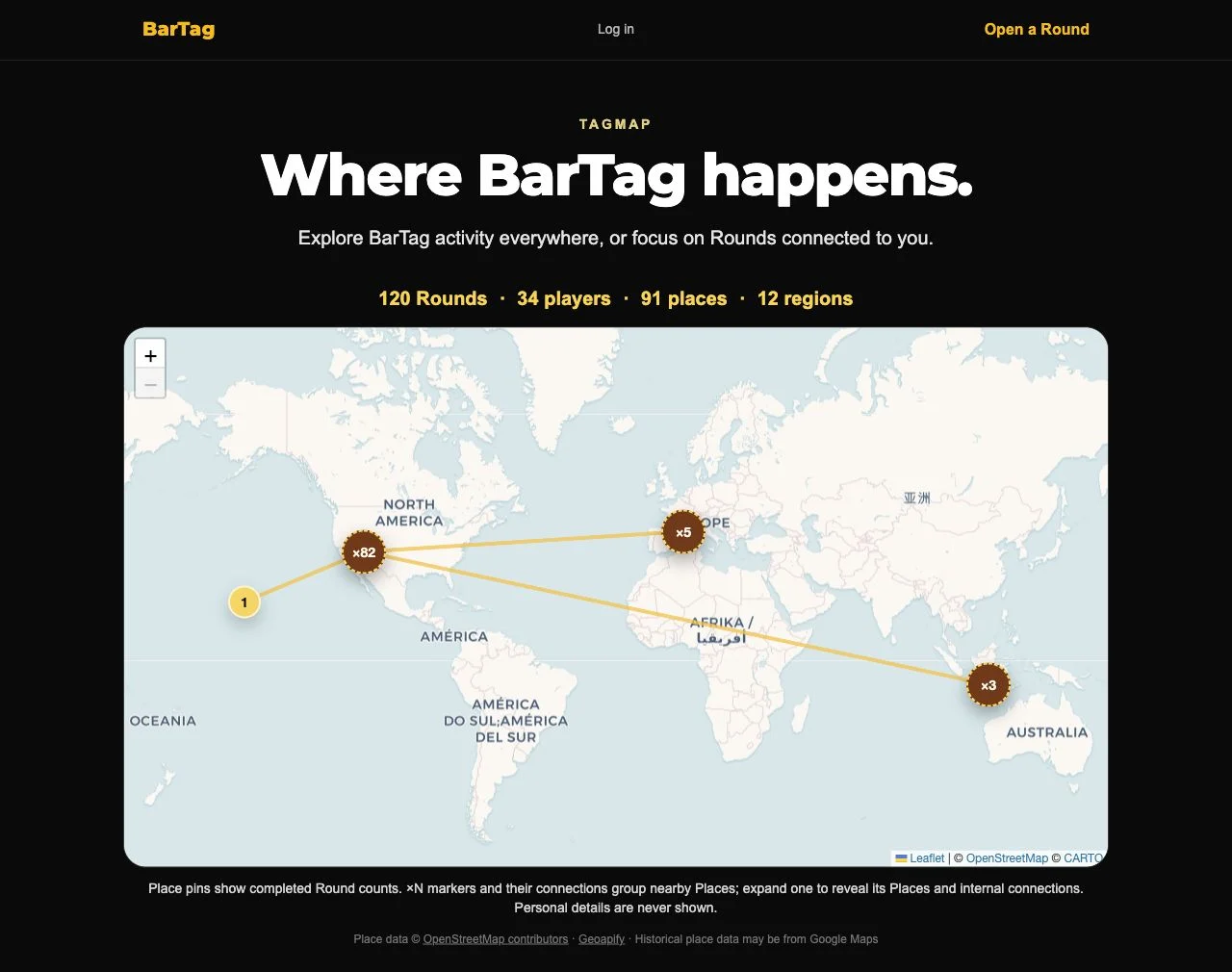
Place search and a player’s recent Places help connect each Proof to a venue. The TagMap lets visitors explore eligible activity from completed Rounds, while signed-in players can view their own activity.
Player dashboards bring together action items, personal history, and statistics. Email and browser notifications support the game’s timing, with account preferences for different types of updates.
Beyond the first prototype
The rebuild separates the shared Round, the Tag sent to another player, and each participant’s Proof. That structure supports multiple players, repeated participation, deadlines, and a coherent story when a Round closes.
Active Rounds are private to authorized participants. Public views use selected completed activity, with controls around photo access and location disclosure. Completed Rounds have shareable summaries.
The work also includes administration tools, notification handling, photo processing, and repeatable testing. Those supporting systems are part of taking an early prototype through months of development into a launched application.
The result
BarTag is back on its original domain as a public-beta web app. It demonstrates the full path from product idea to interface, game rules, accounts, media, maps, and ongoing development—with participation no longer limited to Android users.
Explore BarTagTell me what people should be able to do. We’ll work out a useful first version and what it takes to build it. Custom applications are scoped and quoted individually, separately from my website packages.
Discuss your app idea