Before
- An older website with useful services, articles, and project photos.
- A photo archive worth preserving and making easier to explore.
- Existing page addresses and local content to account for during migration.

Client case study · Tri-Phase Electric
Tri-Phase had years of electrical work worth showing. Customers needed a clear way to see that experience, find the right service, and ask for an estimate. Staff needed a practical way to keep the photos current.
Website: tri-phase-electric.com
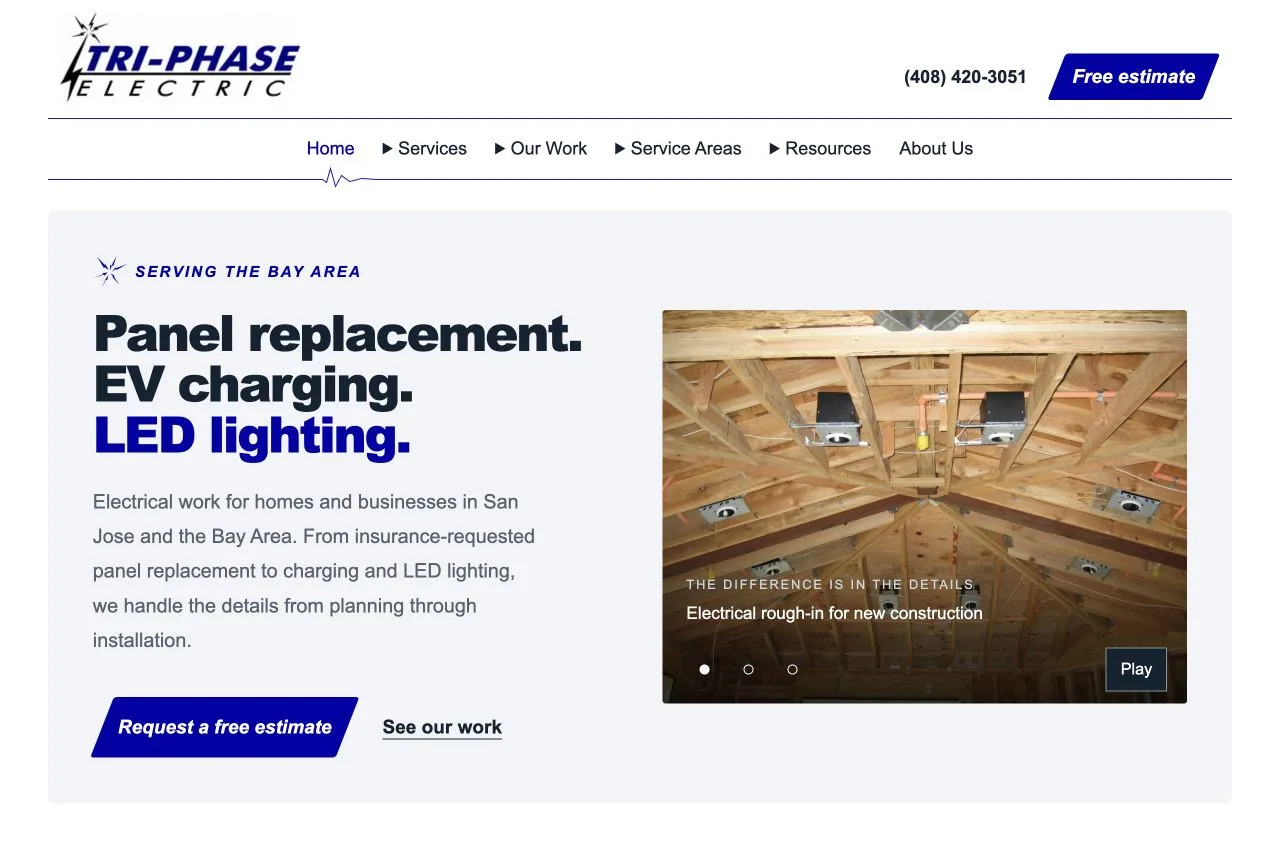
The old site held useful service information, reviews, and project photos. I kept those strengths while replacing the aging website. The plan centered on four jobs: explain the services, show the work, answer questions, and help customers ask for an estimate.
The business needed to feel recognizable across its pages. The refined lightning-bolt logo, blue accents, and consistent layouts tie the site together, with phone and estimate links kept easy to find.
Dedicated pages explain panel replacement, EV charging, and LED lighting, alongside the wider service offering. Customers can see what each job involves, read common questions, and find a relevant estimate link.
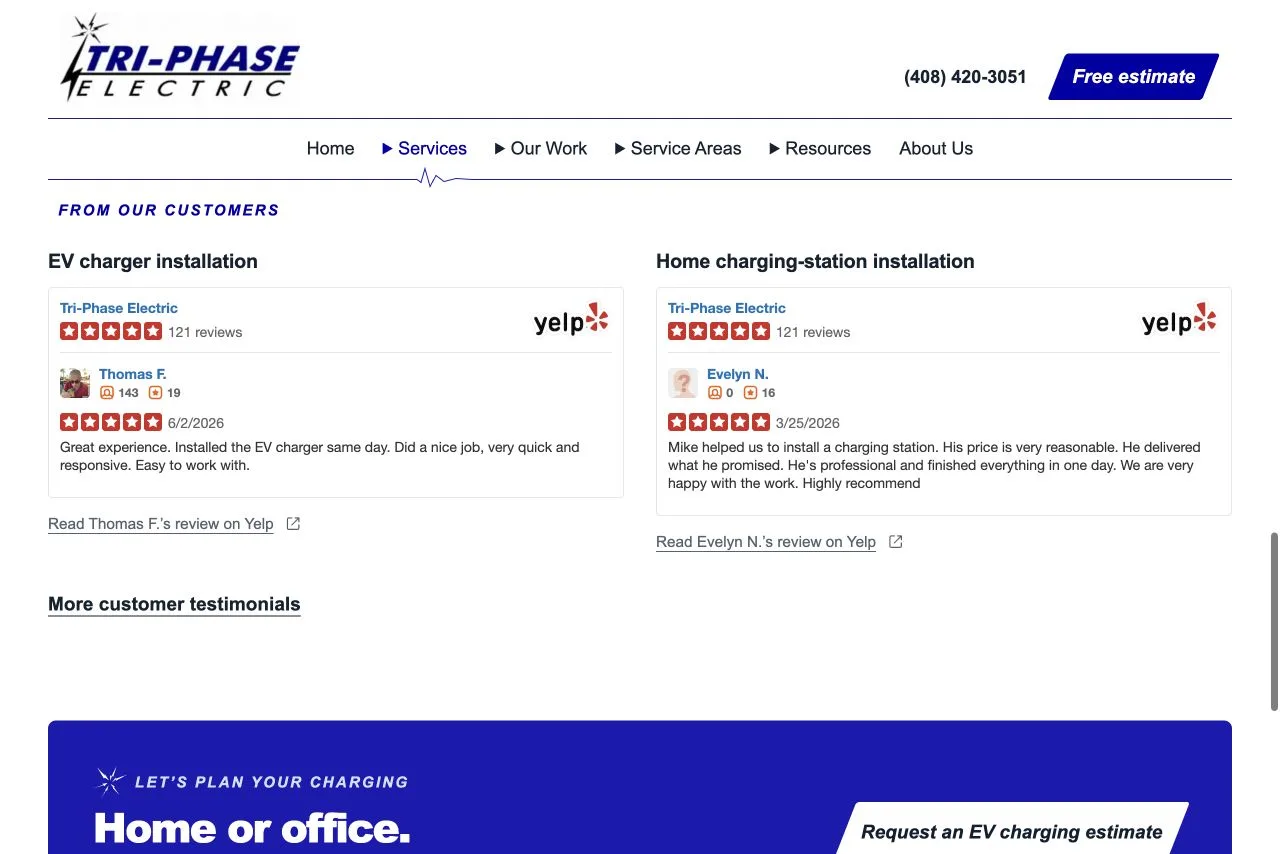
Relevant customer reviews sit beside the services they describe. Official Yelp embeds and links to the original reviews let visitors read the feedback in context.
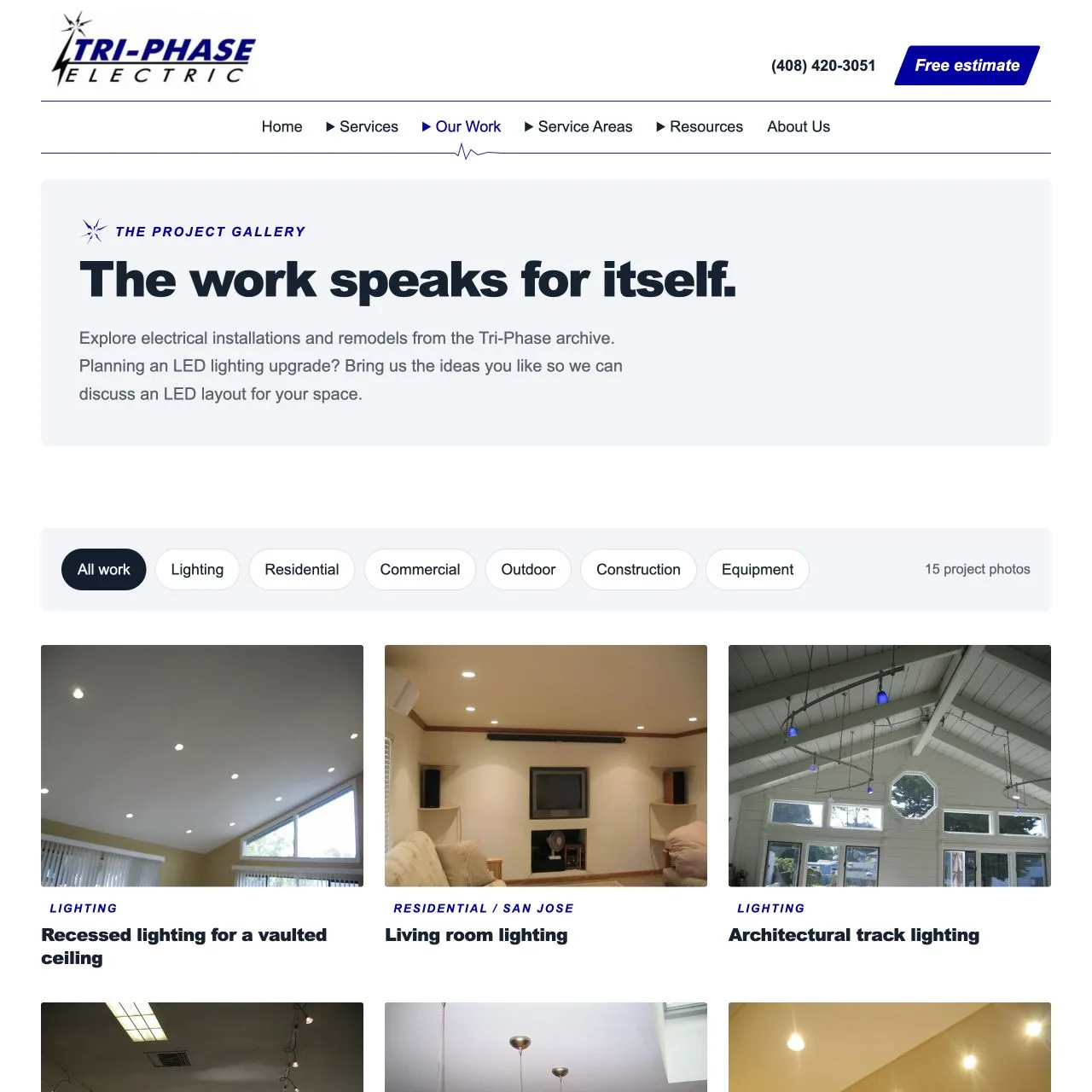
Real photos help customers understand the work. I organized the existing archive into a gallery with categories, captions, and a clear photo viewer. Filtered views can be shared or bookmarked.
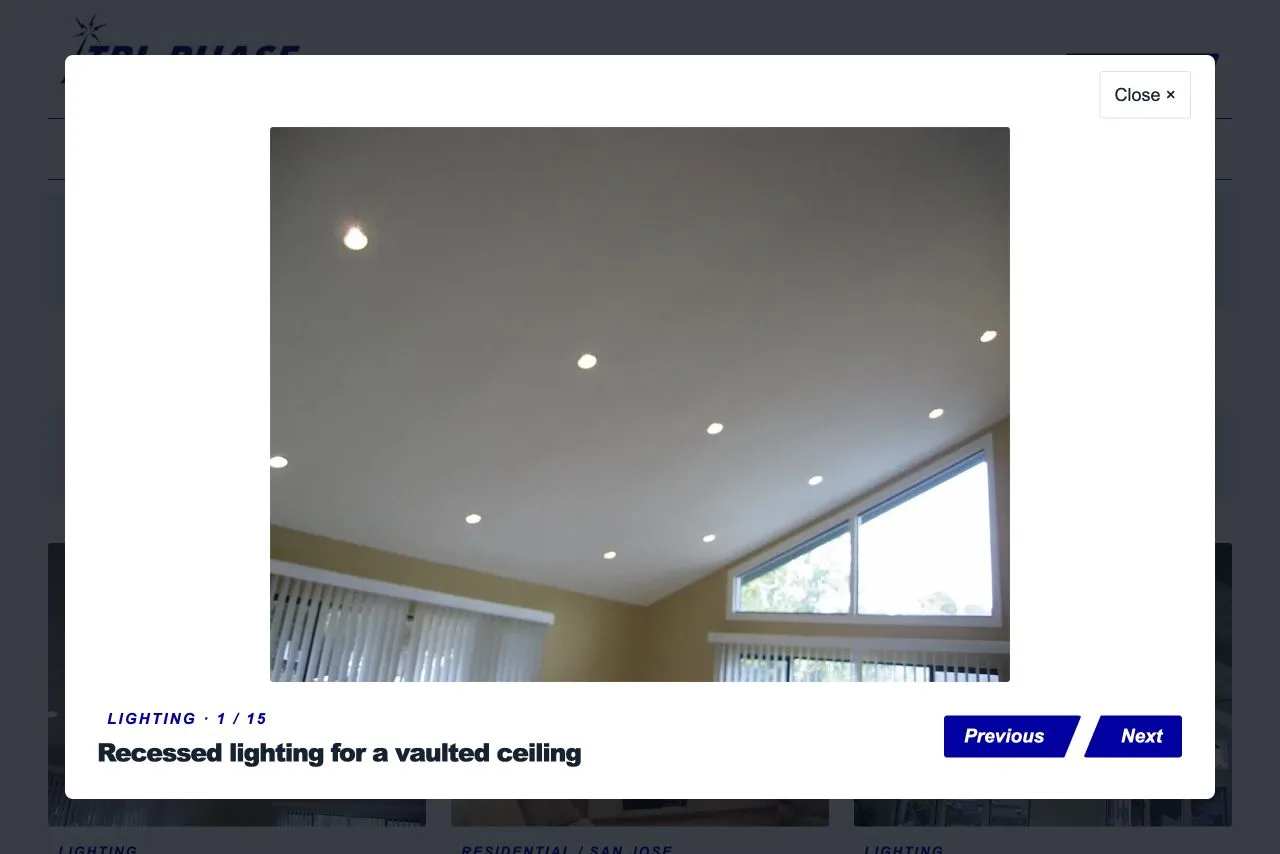
Keeping the portfolio current should be an everyday job. Authorized staff can upload photos, edit descriptions, choose categories and confirmed cities, and publish or hide images without editing code. Existing gallery links stay useful.
Staff use the same photo collection to choose homepage slides, featured work, and other site images. Hiding a photo removes it from public placements, so an old image does not quietly reappear elsewhere.
Team members receive the editing tools their role needs. Owners manage access, and checks help protect against conflicting changes. Routine photo updates can happen through staff tools while website code stays separate.
An estimate starts with useful details: the job, location, timing, and scope. Customers can attach a photo or plan, with phone and email alternatives nearby. Attachments are handled for email delivery rather than placed in a public download folder.
Important old links lead to relevant new pages. The rebuild keeps the service-area content, real reviews, and project history connected, while staff manage everyday image changes through their own tools.
Tri-Phase’s live website brings its services, project photos, customer feedback, and estimate requests together. Staff tools give the team a way to keep showing new work after the rebuild.
Visit the live websiteTell me what’s worth keeping and what’s become a headache. We’ll plan a rebuild around the business and the people using the site.
Discuss your website